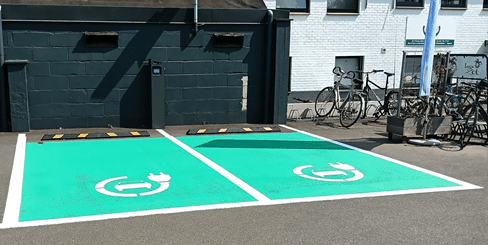
Durable lining of parking lots and warehouses, both indoors and outdoors

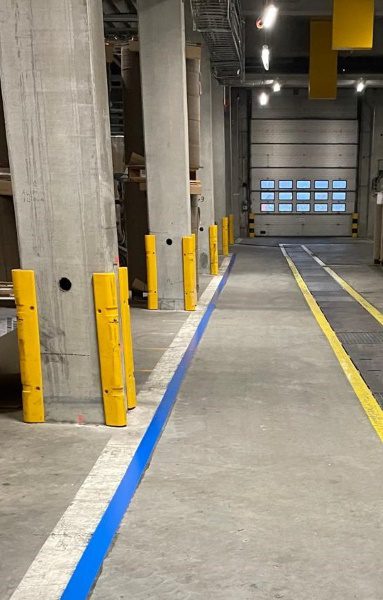
Clear and durable interior and exterior lines are essential for a well-organized warehouse and/or safe parking lot. It not only defines the layout of pallet bays or parking spaces, but also contributes to smooth traffic flow and increased safety for both vehicles and pedestrians.

Analysis for ground marking

In order to make the right choice of parking line markings, it is important to identify the specific needs of the outdoor parking lot. This includes, among other things:

  • Traffic control and safety: Lines help regulate traffic flow and prevent chaos and accidents.
  • Layout of parking lots: Markings for standard parking spaces, disabled spaces, electric charging stations and specific reserved areas.
  • Durability and abrasion resistance: Depending on traffic volume and weather conditions, the lines must withstand wear and tear. More information about the benefits of floor coating.
  • Visibility in all conditions: Reflective or fluorescent paint can help in poor lighting conditions.
  • Resistance to external factors: Water, oil, UV radiation and frost can affect the life of the lines.

Based on these requirements, different types of line markings can be applied, such as thermoplastic markings for a long service life, quick-drying paint for temporary ground markings, or epoxy paint for extra wear resistance.

Types of paint for correct line marking

Depending on the application and required durability, different types of line paint can be used:

  • Epoxy paint: Highly abrasion and chemical resistant, ideal for heavily used parking lots. Learn more about epoxy paint and concrete paint.
  • Road paint: The most commonly used paint for lining of parking lots.
  • Thermoplast: Is applied by heating and has a longer life, especially suitable for symbols, arrows and figures, permanent road markings. Learn more about thermoplastics and
  • Cold plastics (PMMA): Cold plastic paint is a two-component paint. The two components of cold plastic paint are the resin and hardener. Resin is a liquid substance that, when mixed with hardener, reacts to create a solid and durable substance. This substance can withstand heavy traffic loads and weather conditions.
  • Reibeplast (PMMA): Same as cold plastic paint but contains a friction modifier that when properly applied leads to the desired friction of the coating. The grain size of the anti-slipping agent ranges from 0 to 2 mm. PMMA stands for polymethyl methacrylate.
  • Rolplast (PMMA): Same as cold plastic paint but contains a friction modifier that when properly applied leads to the desired friction of the coating. The granularity of the cohesive agent ranges from 0 to 1 mm.


Expert installation and maintenance of parking signage

Correct application of line paint is critical to its effectiveness and durability. This includes:

  • Surface preparation: The substrate must be clean, dry and free of oil and dust for optimum adhesion.
  • Choice of application method: Depending on the type of paint, lines can be applied manually, with a sprayer or with stencils.
  • Skilled application: Careful execution ensures clean lines and consistent layer thickness.
  • Drying and curing time: The lines must be given sufficient time to harden before the parking lot is put into use.
  • Regular maintenance and renewal: Wear and tear, weather conditions and heavy traffic require periodic inspection and realignment where necessary.

During the installation of exterior striping, the parking lot or part of it may be temporarily unused. In consultation, Lumes provides flexible planning so that the burden is reduced to a minimum.

Learn more about Lines

Privacyoverzicht

Deze site maakt gebruik van cookies, zodat wij je de best mogelijke gebruikerservaring kunnen bieden. Cookie-informatie wordt opgeslagen in je browser en voert functies uit zoals het herkennen wanneer je terugkeert naar onze site en helpt ons team om te begrijpen welke delen van de site je het meest interessant en nuttig vindt.